
Call us now :08045800975
 Send Inquiry
 Send Inquiry
Hydraulic CNC Shearing Machine
Price 600000 INR/ Piece
MOQ : 1 Piece
Hydraulic CNC Shearing Machine Specification
- Product Type
- Hydraulic CNC Shearing Machine
- General Use
- Sheet Metal Cutting
- Material
- Mild Steel / Stainless Steel Structure
- Type
- Shearing Machine
- Capacity
- Up to 16mm Cutting Thickness
- Weight (kg)
- Approx 7500 kg
- Computerized
- Yes
- Automatic
- Yes
- PLC Control
- Available
- Bar Feeder
- Not Included
- Power Source
- Hydraulic
- Power Consumption
- 10 kW (Approx)
- Rigidity
- High
- Voltage
- 380V / 415V, 3 Phase
- Motor
- Siemens/ABB Electric Motor
- Table Size
- Customizable
- Spindle Speed
- Adjustable as per requirement
- Axial Choice
- CNC Controlled Axis
- Dimension (L*W*H)
- 4000mm x 1700mm x 1900mm (Typical)
- Feature
- CNC Control, High Precision, Easy Operation
- Color
- Blue & White
- Sheet Support System
- Ball Transfer or Pneumatic
- Blade Length
- 3200 mm (Customizable)
- Back Gauge Range
- 10 mm to 1000 mm (Automatic Adjustment)
- Cutting Accuracy
- 0.1 mm
- Oil Tank Capacity
- 300 Liters
- Throat Depth
- Nil (Standard for CNC Shearing)
- Hydraulic Pressure
- 16-20 MPa
- Lubrication System
- Automatic Centralized
- Controller Type
- Siemens / Schneider CNC Controller
- Main Cylinder Diameter
- 160 mm
- Display
- Digital Readout for Back Gauge
- Strokes per Minute
- 10 - 20 (Depends on Material)
- Hold Down Device
- Hydraulic Type
- Cutting Angle
- 0.5 - 2.5 Adjustable
Hydraulic CNC Shearing Machine Trade Information
- Minimum Order Quantity
- 1 Piece
- Payment Terms
- Cash Advance (CA)
- Supply Ability
- 10 Pieces Per Month
- Delivery Time
- 4-5 Week
- Main Domestic Market
- All India
About Hydraulic CNC Shearing Machine
This electrical and mechanical device is used in the industries for the moulding, compressing and bending of metal sheets. Our offered machines have the pre-specified blade gaps, sturdy installation of various pieces of equipment with cutting-edge enlightenment. This machine performs the processing according to the predetermined parameters. A highly qualitative Hydraulic CNC Shearing Machine can be found at a convenient cost only at our entity. A client searching for an effective Hydraulic CNC Shearing Machine can contact us through our online channel.
Exceptional Cutting Precision and Efficiency
Achieve superior results with high cutting accuracy (0.1 mm) and smooth operations, enabled by CNC-controlled automation. The adjustable back gauge and stroke rate optimize short and long production runs, ensuring consistent high-quality edges in various sheet metals.
Advanced CNC Technology for Seamless Operation
Powered by Siemens or Schneider CNC controllers, this shearing machine allows for easy programmable settings, rapid adjustments, and reliable diagnostics. The digital readout and automatic back gauge positioning streamline set-up, reduce downtime, and maximize productivity in busy fabrication workshops.
Robust Construction and Flexible Configuration
Built for durability, this shearing machine features a mild steel or stainless steel structure, customizable blade lengths and table sizes, and a rigid, vibration-resistant frame. Automatic centralized lubrication preserves components, while a choice of sheet support systems (ball transfer or pneumatic) accommodates diverse processing requirements.
FAQs of Hydraulic CNC Shearing Machine:
Q: How does the automatic back gauge adjustment work on this CNC shearing machine?
A: The machine features automatic CNC-controlled adjustment of the back gauge, ranging from 10 mm to 1000 mm. Operators program the desired dimension using the Siemens or Schneider controller, enabling precise, repeatable positioning for each cut, which streamlines processing and minimizes setup time.Q: What types of materials can be cut using this hydraulic CNC shearing machine?
A: This machine is engineered to handle both mild steel and stainless steel sheets, with a capacity to cut thicknesses of up to 16 mm. Its robust construction and high hydraulic pressure make it suitable for a wide variety of metal fabrication applications.Q: When should the lubrication system be serviced or checked?
A: The Shearing Machine incorporates an automatic centralized lubrication system that continuously maintains optimal lubrication for moving parts. Service intervals depend on usage intensity, but its advisable to inspect the system regularly as part of routine maintenance to ensure smooth operation and component longevity.Q: Where can this machine be installed, and what are the power requirements?
A: Designed for industrial environments, the machine requires a 380V or 415V, 3-phase power supply and consumes approximately 10 kW. With dimensions of 4000 mm x 1700 mm x 1900 mm (typical), it fits comfortably in most fabrication shops or manufacturing plants.Q: What is the process for adjusting the cutting angle and strokes per minute?
A: The cutting angle can be manually set between 0.5 and 2.5 according to material type and thickness. Strokes per minute (1020) are likewise adjustable depending on the material and desired edge finish, ensuring optimized throughput and cut quality.Q: How does the CNC controller benefit production and operator experience?
A: The Siemens or Schneider CNC controller offers programmable, user-friendly operation. Automated functions such as back gauge adjustment and digital readout make setup quicker and cutting operations more accurate, thus enhancing productivity and reducing manual error.Q: What are the main advantages of using a hydraulic CNC shearing machine in sheet metal fabrication?
A: Main benefits include precision cutting (0.1 mm), high production speeds, consistent performance, easy operation, customizable setup, and robust reliability for heavy-duty use. These advantages contribute to reduced waste, improved throughput, and lower overall production costs.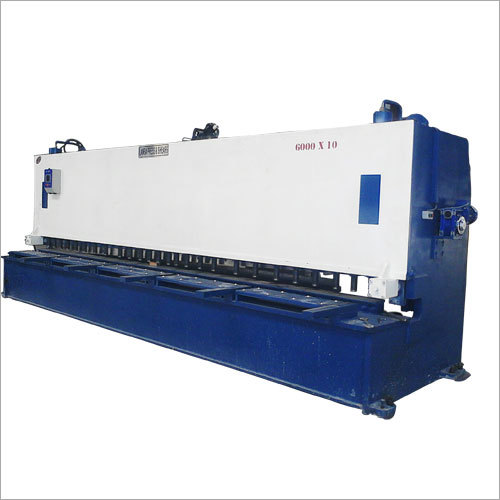
Tell us about your requirement

Price:
Quantity
Select Unit
- 50
- 100
- 200
- 250
- 500
- 1000+
Additional detail
Mobile number
Email


 Send Inquiry

Khasara No-57/11/1/2/2, Village Dhaturi, Tehsil Ganour, District Sonipat,Delhi - 110015, India

Mr TPS Lamba
(Partner)
Mobile :08045800975
 Send Inquiry
 Send SMS
Developed and Managed by Infocom Network Private Limited.
